Kitchen Counter Economics Rotating Header Image

Raising It

Of Mothers Day, Squirrels, and other spring garden stuff

Good morning and Happy Mothers (and Grandmothers and Great-grandmas and people who care for kids everywhere – I think I covered it). Toughest and best job in the world. Do something really nice for yourself today.

My version of ‘doing something nice for myself’ involved working in the garden. And it occurred to me that someone else might find something useful in what I had to do this spring. Through shear negligence (laziness, running out of time in the fall, pick an excuse), I ended up leaving some of the onions in the garden. It’s not that hard to do, actually – the leaves die down and if I can’t see ‘em, I don’t dig ‘em up. So, this spring, when the snow finally left (and condolences to folks out in Michigan who got snow today), I found I had a whole bunch of onions that had survived the winter and had started to sprout. Now, when onions do that (and you see that in your bag under the sink, too), the outsides get soft and rather nasty. They can also split into smaller onions. It’s sort of like having your own little onion plant factory. So, I thought perhaps other gardeners, especially some of the newer ones, might find this technique as easy and useful as I do in terms of getting onions planted in the spring if you’ve left onions in the garden over the winter. (more…)

Seedlings Will Not Wait

There is one fact about starting seedlings early yourself – sometimes no matter what you do, they just take off and there you are, more than a month before you can even think about putting them into the ground (and at Chez Siberia, we’re talking probably 5 weeks from now unless I decide to throw caution to the winds), and the seedlings have outgrown their packs and hoo-wee, what are we going to do now?

Well, your Aunt Toby, over the past (ahem, well, let’s note get into how long, shall we?).. well, we’ve tried a whole lot of different methods here at Chez Siberia, to hold over tomato seedlings until ‘more auspicious times’. In the old days, when I could get waxed paper milk cartons, I’d sink them into those (and we also at that time had three Little Siberians, so we went through a lot of milk). These days, I’m just using pots, but if you have a source of waxed paper cartons (juice will also do; just make sure you rinse them out really well and punch a couple of drainage holes in the bottom. The secret is to match the size of the pot or carton to the length of the seedling above the level of the dirt.

You are going to — mwa-ha-ha — bury them.

So, take your carton and hold it up against the seedling and mark the top of that and cut the top off. if you have appropriate sized pots, then use those.

Using a really good potting mix (if it’s light brown or fluffy, this means that it’s got TOO MUCH PEAT IN IT. So, don’t use that. If you have that already, then add compost and something like vermiculite to hold water), put a small amount in the bottom – an inch will do. Pop the seedling out of the pack and GENTLY crumble the soil at the root level. You want to free up those roots. Then carefully take off the bottom set of leaves (trust me on this one) and put the seedling into the carton or pot.

Put in some potting mix around the bottom of the seedling and firm down well. Then holding up the seedling with your other hand, fill in the rest of the pot. Your tomato seedling should be just showing the regular leaves now and the plant will form roots all along the stem under the dirt. When it’s time to plant it out, just dig a deeper hole than usual.

On and on in the garden

For those of you who are in Zone 5 and higher, my situation really does not fit. I’m sure you’ve been planting out in your gardens for weeks, if not the last month or so. And for those folks in Zone 7 or 8, you are coming to the end of your winter growing season, I’m sure!

But, for people like your dear Aunty, who grow in ‘Zone 4 which is really Zone 2′, things are still very chancy, even for cold weather crops. We had a couple of very warm days last weekend, which put the soil temperature way up, but I knew it would not last. Since we were slated to get rain (which we did, day after day after day), I uncovered the beds that I’d put under plastic so that they’d get a good drink and then I covered them back up again to get some solar gain.

Sometimes, people ask me whether putting plastic (or glass as I’ve done before) really is worth it. Well, this morning, after running errands, I went out and took the temperature of the end of the bed that didn’t get covered with the plastic. It was 44.3 degrees F. Too cold to plant anything in. Under the plastic, it was 50.1 degrees F. Marginally ready to put in seeds for plants such as lettuce, cabbage, cauliflower, broccoli, Chinese cabbage and so on. I’ll give it one more week. We’re supposed to have a couple of very sunny days in the low 60-degree range, which should bring that area under the plastic into a solid mid-50 degrees which will be plenty safe for sowing those seeds.

But I’d like you to notice the difference. Not under the plastic: 44.3 degrees F. Under the plastic: 50.1 degrees F. At this point in the spring, that’s a lot of temperature difference so I have to say it is definitely worth it since I’ll be able to put in those seeds now, in April, instead of late May otherwise. So, I’ve gained 6 weeks on my growing season. Definitely worth it.

The photo at the top is of some buckwheat seeds I gave to my grandson to plant in a pot as a little activity this past week. He planted them on Tuesday. I put them into a plastic bag on top of a heating pad covered with an old towel in the green house. That photo was taken on Thursday.

48 hours, some dirt, some moisture and some heat and up they come. But wait until you see the next photo: This photo was taken on Saturday!! So, there you are – in terms of buckwheat, as long as you’ve got warmth in the soil and some moisture, they are up and running fast, which is the reputation of this plant, since the directions literally tell you that if you are not interested in growing buckwheat for seed (that is, to harvest seed for eating or saving), you need to be cutting it down and digging it into the soil in less than 6 weeks, when it will be flowering. This past week, when we had those sunny days, I sowed one whole bed under the plastic with buckwheat seeds to start the soil improvement process. That bed was created last year and we did not have proper compost to do it. We used compost from the county landfill which frankly was mostly rotted wood chips. It was awful and the tomato plants we put into it showed the lack of soil and lack of nutrients – they frankly crouched on the ground. It was a waste of time to put anything in there. I should have done then what I’m doing this spring – put in buckwheat and when it’s up, cut it down and dig it into the bed, then water well and sow more buckwheat seed. In a couple of months, I’ll have a lot better bed than I do now and I’ll be able to put something else in there in June and July, whether that is a crop of beans, or cabbage family plants for the fall.

Let’s see now. In our greenhouse (which is unheated – I use heating mats with grids over them for the seedlings to stay warm inside their huge clear plastic bags), the pepper and tomato seedlings have had to be moved to larger quarters, and I also sowed a flat of a mix of basil seeds I got from Pinetree Seeds Pinetree Garden Seeds. One of the things I especially like about this company (besides the fact that it is locally owned, not part of a conglomerate, and they offer an amazing array of vegetable seeds from all over the world) is that they offer mixes of things. I don’t have that large a garden, so buying three or four different packets of any particular thing is not cost effective for me. But we use basil in cooking a lot, so I grow a lot, and like different types for different reasons, so having a packet of a mix of basil is a great thing for me. They offer mixes of seeds for almost all of their veggies so, if you want to try something new, I recommend you take a look.

Another change this year is that our grandson is now at the age where we can start inculcating (woops – introducing him might be a better word) him about the wonders of gardening (hence the handful of buckwheat seeds in the pot of soil). I showed him a seed catalog and we went through it, identifying the various vegetables and talking about what he’d like to grow in ‘his’ garden – I figure one little 3-4 foot end of a bed will work for one tomato plant, one pepper plant, a marigold (got to have flowers in every garden, right?) and a handful of beans. I always feel that little kids get some of their best introductions to new veggies when they are in the garden and can pick, snip and pull them up by themselves. Who knows, perhaps he’ll learn to like kohlrabi and parsnips this year?

Gardening when it’s too cold to garden

Anyone who knows me will tell you that I am one impatient gardener. Last year, we got lucky and by this time, it had been in the 60s for several weeks. No such luck this year. The photo at the top was taken about a week ago. faced with a garden covered in snow and wanting to get things started, I know only one way to jumpstart the soil- warming process.

Shoveling.

Yes, I literally took out my show shovel and scraped off as much of the snow off one of the garden beds as I could. And it looked like this: The ground was frozen solid so there was no way to get anymore of that off without removing actual soil from the bed. But the thing is this: Once you’ve taken the top layer of the snow off, if there is any sun or warmth at all, the rest will melt off. and then you have dark soil. And if there is any sun at all, that will start to warm up.

I’m not kidding you. Literally within a couple of days, not only was everything melted off that bed, with the other beds to follow, but the soil in that particular bed was up to 39 degrees F. From ‘frozen solid’ to 39 degrees. And that is without any help from glass or plastic (which I put out this weekend since we are slated to have a sunny week this week. I’m pushing hard to get that bed up to 50 degrees so that I can put in seeds for lettuce, cabbage, broccoli, chard, beets and other cold-hardy crops. I’m just itching to get out there but just can’t until that soil warms up.

Other activities which keep me from going bonkers about not being able to get out and put my hands in the soil are starting seeds. About two weeks ago, I started various tomatoes (including seeds from a paste tomato that I saved in 2008 (that is not a typo, folks – tomato seeds under the right conditions (in this case, inside waxed paper inside a ziplock(tm) bag in the fridge door) will stay potent for a long time. And I think every single one of those seeds came up. I was amazed.

Now, I’ve tried all sorts of DIY methods on seed starting, including a wonderful screened table that the DH built for me in the basement where we clipped infrared lights that are used for brooding chicks underneath the screens, but in the end, the trick is:
a) You need a gentle source of heat underneath the soil and
b) You need a humid atmosphere

Once they are germinated, then you need sunlight. They took off so quickly that by the time I got time to transplant them this weekend, they had gotten too big, so I pulled together some 4″ pots and planted the seedlings up to their leaves in soil. Another thing I did, which I also advocate is that I dragged the potting mix out onto the patio into the sun, filled the pots out there and left them there in the sun for most of the day to bring the soil temperature in the bots up to at least 50. That bag of potting mix had been in the garage and it was frankly about 35 degrees. If I’d transplanted into that, I’d have killed or stunted the tomatoes for sure. As it is, they are very happy campers now. The peppers are not as far along, which is standard, though I’m not sure why peppers should take longer to germinate and take off than tomatoes do, but I have never had an experience where they have not been slow.

So, at the moment, I have a couple of garden beds which are now under plastic and hope the sunny days this week will bring them up at least into the 40s. It usually takes a couple of weeks of solid warm weather and sun to raise the soil under glass or plastic into a temperature range where I can feel reasonably secure about putting even cold-weather crop seeds into it. If I had them as seedlings, it would not be as risky, but they are easy enough to plant into the soil if it’s in the 50-degree range.

What are you planting this year? My new vegetable this year is parsnips. I had a wonderful dish of parsnip puree during the winter and I’m willing to give them a shot.

Getting a box

When your dear Aunty was very young, I got into the habit (as some comic in years past put it) of ‘sending away’. Now, of course, this was years before the internet was a glimmer in Al Gore’s eye, and even years before true mail order as it became known became a huge industry. It was the sort of thing where you saw an advertisement in a magazine or a newspaper and you sent in your postcard or a letter (with a self-addressed stamped envelope!) and you got stuff in the mail back to you. Addressed right to you. (more…)

Garden Planning: Where is the shade going to fall?

Something which, even after 35 years plus of gardening together, the DH and I are still fine tuning is the issue of where to put stuff to grow, keeping in mind the path of the sun versus the orientation of our garden beds. In the picture above, taken this morning at about 11:30, you see your dear Aunty, standing outside (in the rather windy 16 degrees F, I might add – the things I do for you guys..) in one of the garden beds, in the snow, holding up a door. (more…)

Ginger: Did it work?

Well, your Aunt Toby has been out and about and across the big pond and back again and I have absolutely no excuses for no postings but that is the way it goes. Lots to cover. In an early May episode, I decided to do a little experiment to see if I could, in chilly, short-season Upstate New York grow ginger. Make Friends With Ginger

I bought a ‘hand’ at the grocery store, cut off several likely looking pieces, (more…)

Garlic: Music wins again

Last year, at just about this time, I dug up the garlic and we discussed how to pick which garlic and which cloves to save to plant in the fall for the next year. How to choose garlic for seed

And I remarked in that post about how fantastically the variety called ‘Music’ is. And you can get it here: Music
Music
Garlic varieties
Music

Not that I don’t think there are other great garlic varieties out there. What grows well for someone in Missouri might not grow well for us here. But I can tell you that after another horrific summer (and this time it was not wet, dry, hot, wet. We had a horrible dry winter), this variety came out like a champ. As a matter of fact, we had very little snow this winter, so even though the cloves had a bit of growth in the fall, (and we actually had plenty of rain in the fall), they were uncovered all winter long and then went into the spring with no moisture in the soil. The spring was dry too and then we went into June and July up here with practically no rain at all and super high temperatures – the hottest July on record.

So, the garlic was stressed in a major way. And I could certainly tell the difference when I compared the other garlic that I grew in the same bed. Same bed, same soil, same growing conditions, same amount of moisture. Music won again. Big juicy bulbs with huge cloves. Very impressive performance given the heat and drought stress. The photo at the top is a “Music” bulb that I partially uncovered to take a photo so that you can see just how big and robust it is. That bulb was about 3″ across at the bottom. I can’t recommend this variety enough.

You wouldn’t happen to have a snath on you, would you?

In the average American homeowner’s garage, there are all sorts of tools and machines. Some are pretty simple, like shovels or rakes (one step up from a stick, actually); others are more complex and usually run on some sort of motor or engine. They many times are used to cut something – grass, brush, weeds.

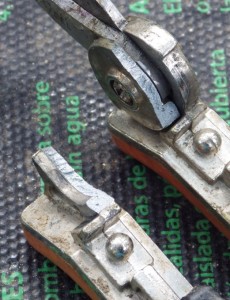
Most of them are merely powered versions of that thing in the picture at the top of the page, in pieces, awaiting the DH’s ministrations with glue and a screwdriver: A scythe.

Invented before the birth of Christ, this more advanced (and advantaged) version of a sickle allowed mowers and reapers to work standing up. Using a sickle is real ‘stoop labor’ and you can’t really get any speed with it as the motion is: Bend down, grasp a bunch of grain plants in one hand, cut it with the sickle and lay it down. With a scythe, a mower or reaper can walk and swing the scythe with every step. The advance of putting a long handle and a blade at one end enabled workers to literally cover far more ground. It also enabled workers to organize the work so that mowers and reapers would line up in a field with space in between them and work their way down the field and the whole field would be finished at pretty much the same time. OH – just as a note: Mowing refers to cutting grass; cutting grain is referred to as reaping – so “The Grim Reaper”, that is, Death represented as carrying a scythe, is obviously meant as a being associated with harvesting grains. I guess he can’t be bothered mowing the lawn. (more…)

Bee Report

Well, the weather straightened out enough that the DH could go out and check on the bees. Usually, he’d have gone out in the beginning of May but it was cold and rainy and this is not only not good for bees but everyone would have been home, so to speak, so it makes it much more dangerous for the beekeeper in terms of getting stung. On a day like today – bright, sunny, warm, a little breezy, everyone who is supposed to be out and at work… is out and at work. Everyone else is basically busy raising baby bees and doing storage work. (more…)

Blog Widget by LinkWithin

Bad Behavior has blocked 418 access attempts in the last 7 days.